This year we are once again dealing with invasive phragmites. This time in several areas in the Algoma region. Often along roadsides it establishes itself which can cause several safety issues in being able to turn during summer, as well as biomass that is easily flammable.
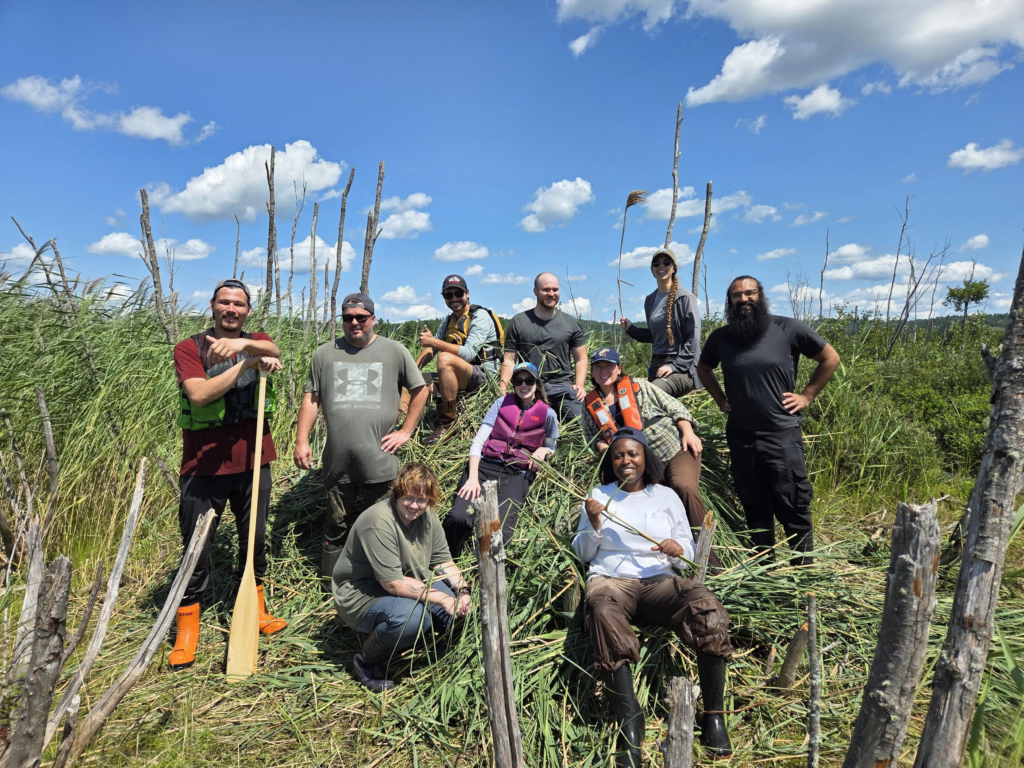
Currently we have mainly sprayed the edges of several properties in Prince township and Echo Bay. We are working with various First Nation stewards (such as Garden River and Sagamok) to do manual pulls for phrag in areas under their care and leadership.
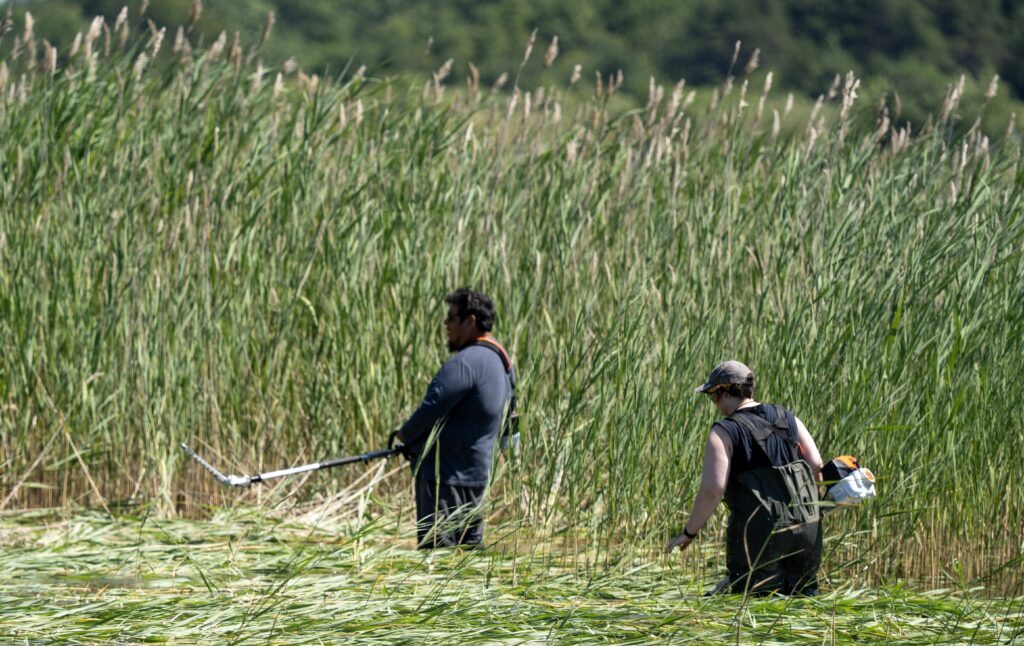
We had also been scouting more areas to search for patches along St Josephs Island and areas along Superior. The hope is to find plants to remove to contain spreading and prevent stands from creating monocultures.
We have also this year put on a farmer phrag. information session to alert farmers of the plant as well as impacts it has on agriculture.
Curious What We Did Last Year?
Mapped thousands of kilometers on the highways between Blind River, Sault Ste. Marie, Wawa, and Chapleau. Phrag. patches were then uploaded to a field map in which we and our partners use to streamline reporting as well as track these locations.
While mapping patches that were harder to ID as invasive or native were tested to confirm ID via the plants DNA.
Things That You Can Do To Help
- Familiarize yourself with features to ID this plant.
- Report patches or plants that you see.
- Avoid spreading it by walking or driving through plants, picking seed heads, a reminder that under Ontario law it is a crime to sell or transport this plant.
- Clean equipment when not in use. This includes boats, ATV’s and construction equipment used nearby patches.
- Avoid planting grasses that are non-native. Often it can still be found in nurseries under different names, many local Algoma garden centers can suggest native variants, or offer alternative plants.