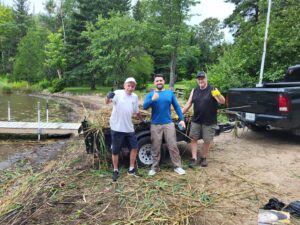
For the past two years, our working group has been fighting invasive Phragmites australis to protect Algoma’s wetlands and wildlife.
Background of Invasive Phragmites
how did the species get to North America in the first place? the plant was brought over as ornamental plant trade for it’s valued Hight and the aesthetically pleasing seed heads.
planted around ponds, and wetlands. it quickly spread throughout Northeastern United States, and into Southern Ontario. from moving contaminated soil containing rhizomes or seeds from off road vehicles, and boats.
it is believed the spread to Algoma is from construction equipment as most stands have been found on the side of highways.
Steps Lake Heron North and The Working Group Has Done
Regional Response Efforts:
The Algoma Region Phragmites Working Group, led by Lake Huron North, includes local municipalities, Invasive Species Centre, First Nations communities, CAFC, private landowners, and government agencies.
In 2024, the group:
• Mapped thousands of kilometers of roadway from Blind River to Sault Ste. Marie, Wawa, and Chapleau to document Phragmites spread.
• Developed a Field Maps data-sharing app to streamline population reporting between partners.
• Held a training workshop on plant identification and control methods,
. • Conducted DNA analysis to confirm difficult-to-identify patches.
• Planned a strategic, region-wide control initiative focusing on leading-edge populations and ecologically sensitive areas.
What’s Next in 2025?
This year, the initiative is scaling up:
• Expanding mapping efforts to include coastal wetlands along the North Channel, Lake Superior’s bays, and the Goulais River.
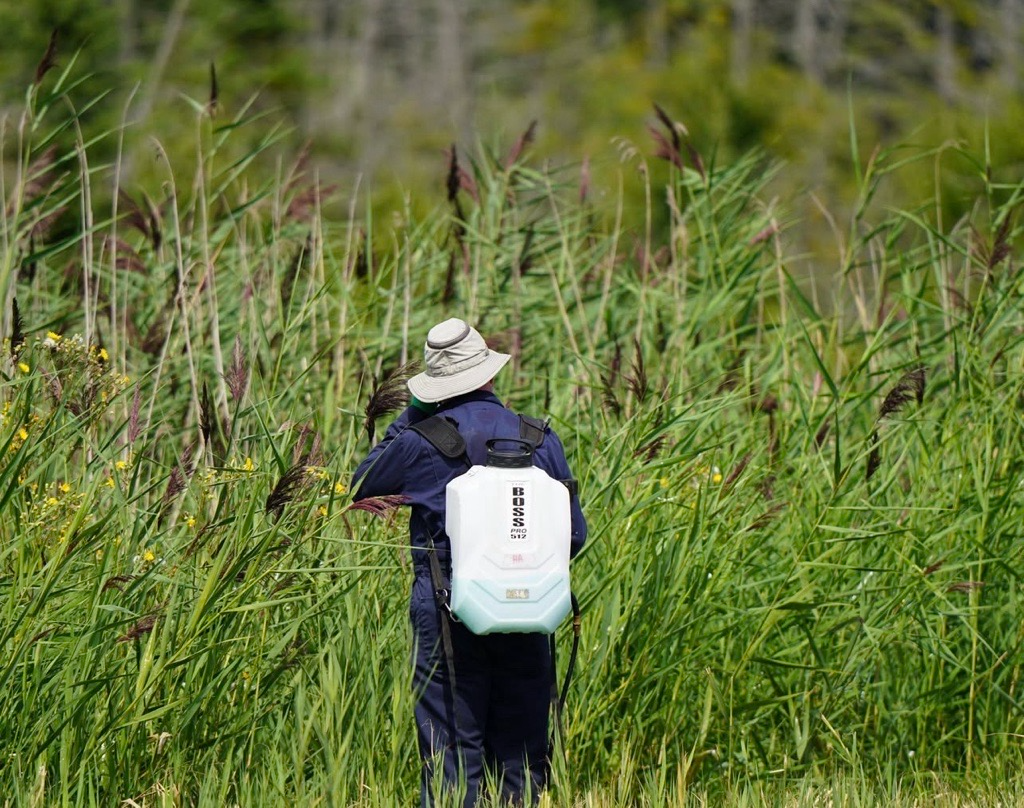
• Hosting new training sessions with Garden River and Batchewana First Nations. • Starting active management with selective backpack spraying in high-priority locations.
• Hiring a summer student to assist with treatment and monitoring.
• Conducting mechanical control at Sagamok First Nation.
• Performing follow-up treatments in Blind River and near the Goulais River.
The Impacts of Invasive Phragmites:
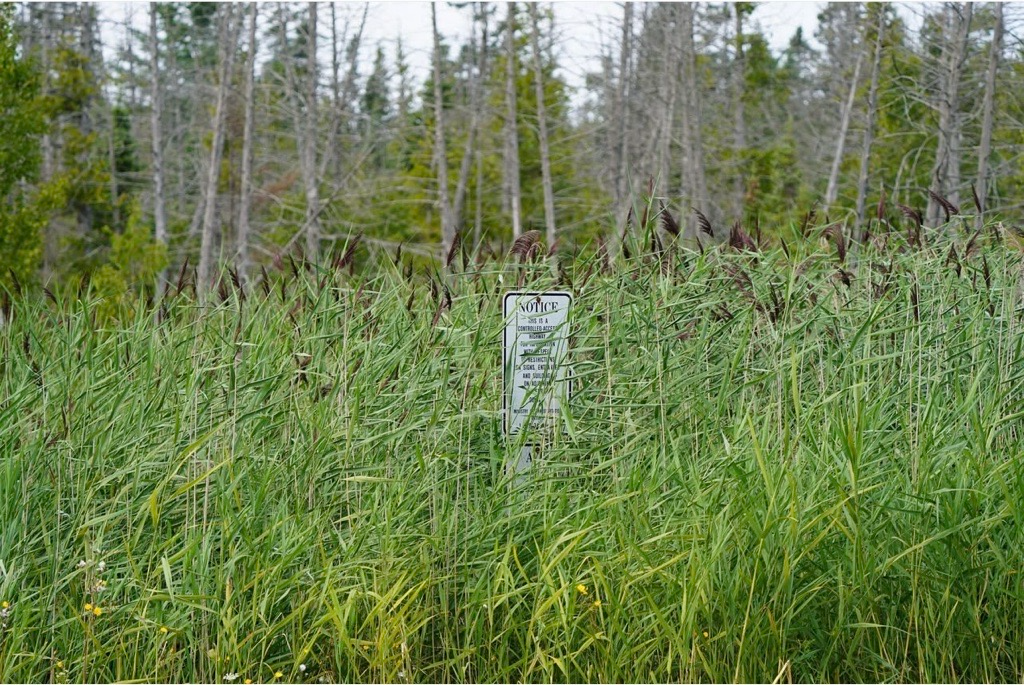
• Loss of Biodiversity: Invasive Phragmites forms dense monocultures that crowd out native plants, reducing habitat quality for birds, mammals, amphibians, reptiles, and insects.
This is particularly damaging in wetland ecosystems—some of the most biologically diverse areas in the region. In Ontario, Phragmites is estimated to negatively impact 25% of species at risk.
• Habitat Degradation: Native wildlife that relies on wetlands for nesting, feeding, and breeding are significantly affected. The tall, dense stands of Phragmites restrict access to open water and limit space for native vegetation critical to healthy ecosystems.
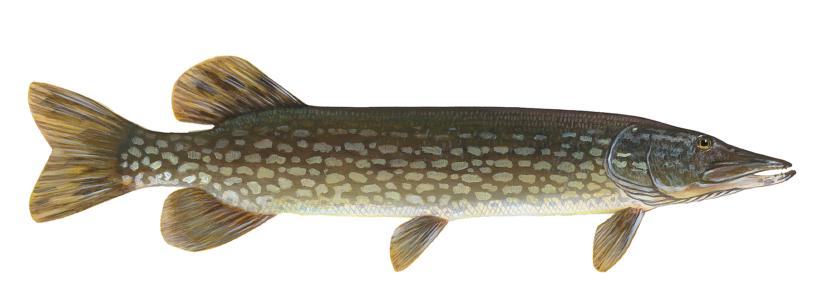
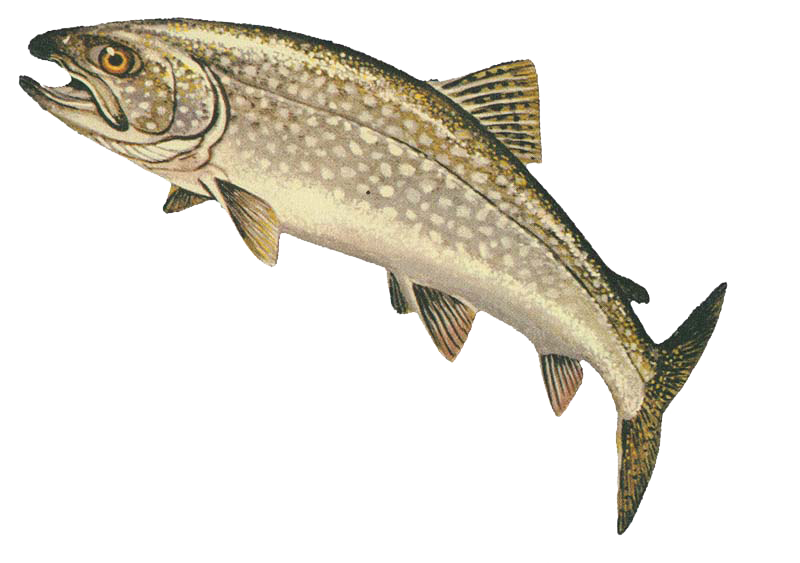
• Alteration of Wetland Function: Phragmites disrupt water flow, increase sedimentation, and alter nutrient cycles. Its dense root systems can even form soil banks in shallow streams, blocking migratory fishlike salmon, trout, and walleye from reaching their spawning grounds.
• Increased Fire Risk: Phragmites accumulates a high volume of dry, dead stalks, which are highly flammable and elevate the risk and severity of fires—especially in areas adjacent to infrastructure.
• Socioeconomic Costs: In agriculture, Phragmites clogs drainage systems and invades fields, leading to yield loss and increased management costs.
• In recreational areas, its spread diminishes property value and obstructs activities like swimming, fishing, boating, and hunting. In small shoreline communities where outdoor recreation and tourism are vital industries, invasive phragmites can be especially devastating.
What you Can Do to Help
Report Sightings: If you spot invasive Phragmites, report it on iNaturalist or contact Lake Huron North’s Project Coordinator directly at dfeatherstone@ssmic.com. Photos and location information are extremely helpful.
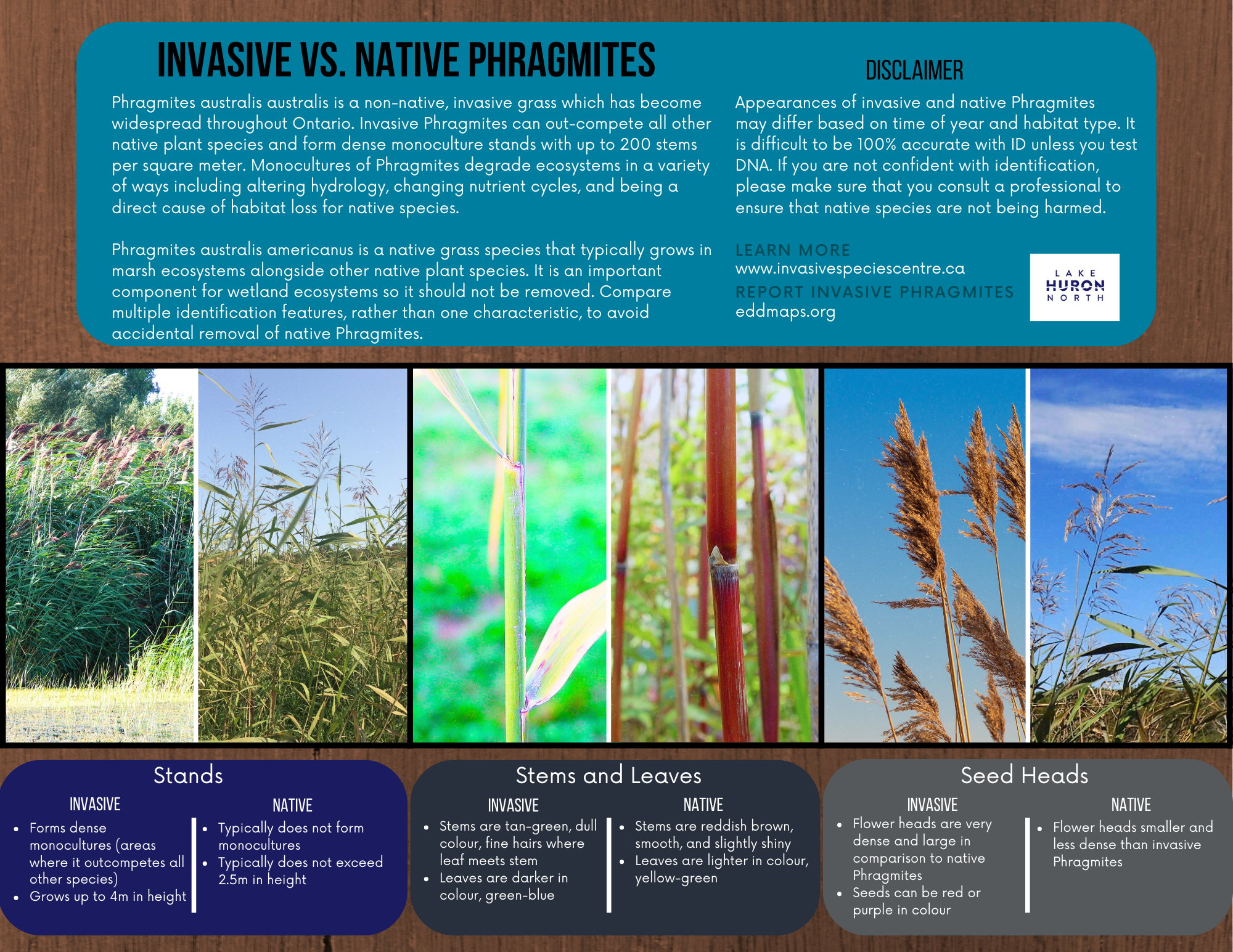
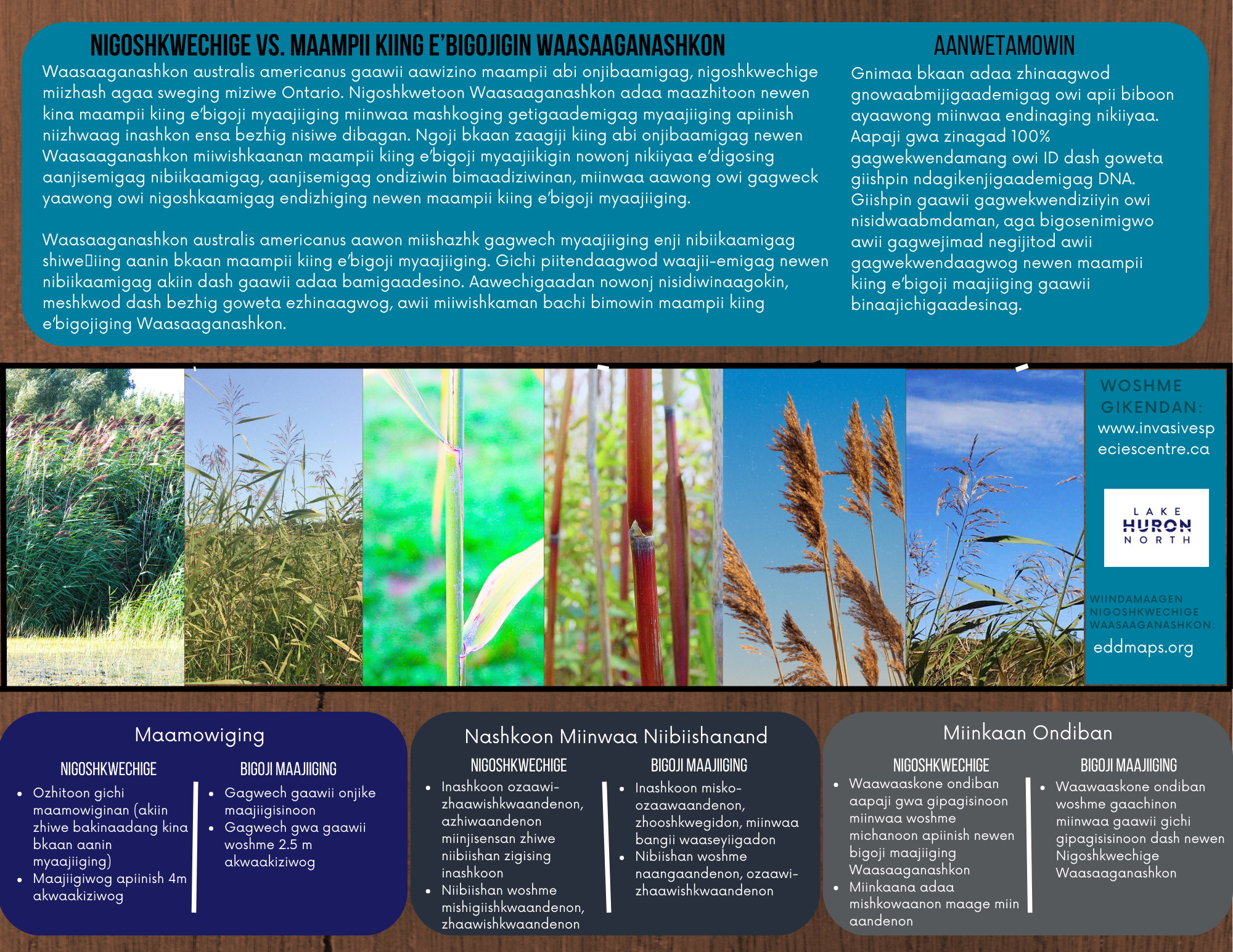
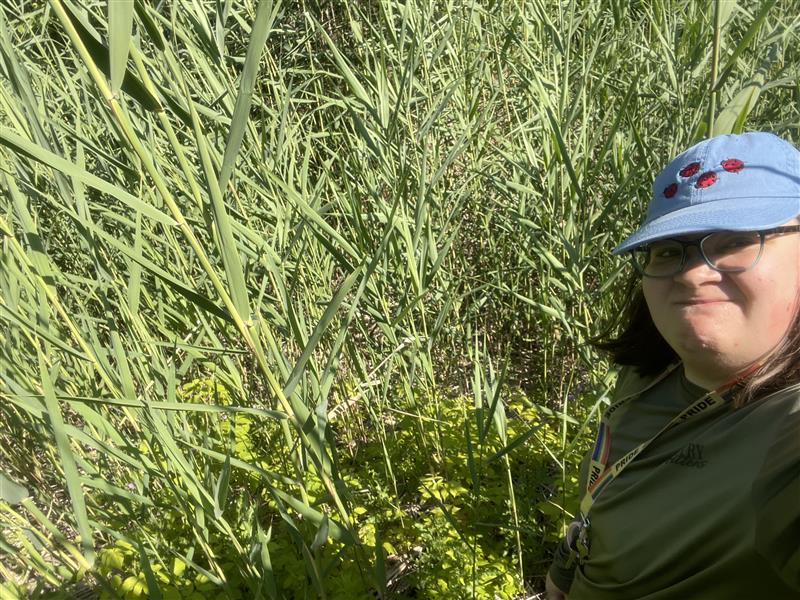
• Learn to Identify It: Familiarize yourself with the key differences between native and invasive Phragmites. Invasive types grow in dense, tall stands (often over 5 meters), with stiff stems, tan or grayish seed heads, and a lack of biodiversity underneath. https://www.opwg.ca/phragmites/native-vs-invasive/
• Avoid Spreading It: Refrain from driving off-road vehicles, ATVs, or heavy machinery through stands of Phragmites. Seeds and rhizome fragments can stick to tires and equipment, leading to accidental spread.
• Clean Equipment Thoroughly: After working, hiking, or driving near infested areas, clean boots, vehicles, and tools to prevent spreading fragments to new locations.
• Avoid planting ornamental grasses unless you’re certain they are native or non-invasive. Invasive Phragmites is still sometimes sold under misleading names.
• Spread the Word: Share information with your friends, neighbours, and local community groups. The more people who can identify and report invasive Phragmites, the better our chances of eradicating it from the regions
Looking Ahead:
Lake Huron North and its partners are increasing public awareness, expanding control efforts, and continuing to host working group planning meetings. The goal: to eradicate invasive Phragmites from the Algoma Region by 2030, transitioning to long-term monitoring to prevent invasive phragmites from establishing